


The paper I almost never wrote
About unfinished chapters, quiet doubts, and the courage to finish anyway.
The first time I opened a new Word document to start writing my final CAS paper, I stared at the screen and thought: How on earth do people write 20 academic pages?
Twenty pages may not sound like much. But they become surprisingly long when you have absolutely no experience in academic writing. And that was exactly my situation.
A few years earlier, a good friend of mine had forwarded me a link to the CAS African Affairs at the University of Basel. She knew how passionate I am about everything related to Africa.
When I looked at the programme, I immediately felt drawn to it. Courses like Intercultural Competence, Youth in Africa, and Decolonizing Aid caught my interest right away. At the same time, I had doubts. Somewhere in the back of my mind there was always this quiet thought that kept popping up: You never finished.
At the age of 20, I had dropped out of university because I simply could not imagine studying more statistics and methodology. I had enrolled in psychology, but it turned out to be very different from what I had expected. Instead, I started working, built a career, and at some point I was even earning more than many of my friends who had completed their studies. On paper, everything was perfectly fine. And yet the feeling remained, a quiet sense of unfinished business.

So when I discovered the CAS programme, I thought: Maybe this is my chance to finish my learning journey at university level.
There was only one problem: I did not have a bachelor’s or master’s degree. I had to apply “sur dossier”, based purely on professional experience, and I was not even sure they would accept me. But they did.
What I did not fully realise when I registered was that the programme would end with a 20-page academic paper (not including annexes). Suddenly that blank page on my screen felt very intimidating.
And life, of course, did not pause while I was studying. The programme started just as COVID began. During those years we had another child, moved to Nigeria for a while, later returned to Switzerland, and life simply kept unfolding.
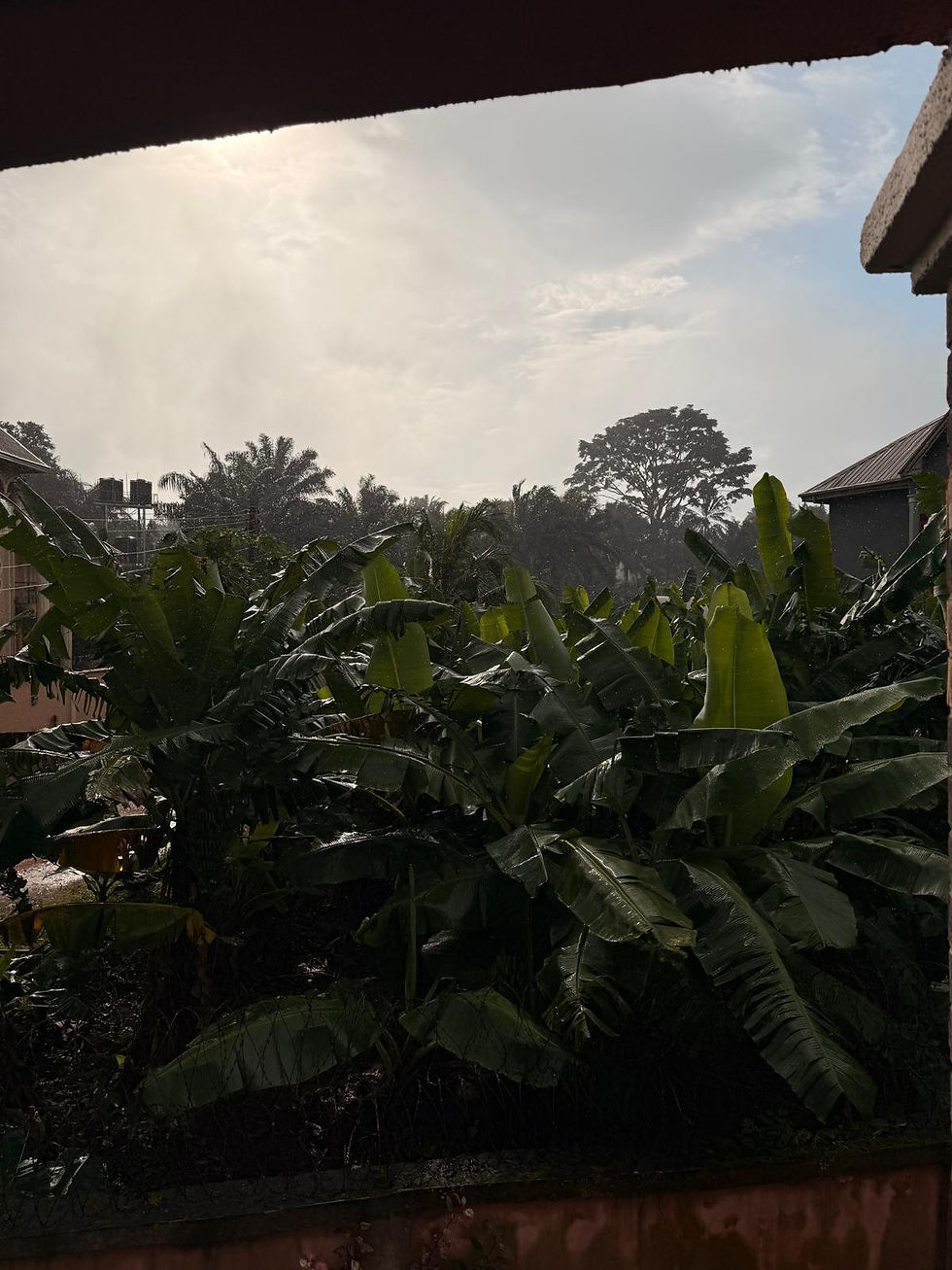
At some point so much time had passed that I even felt shy to contact the university and ask whether I could still finish. Eventually I gathered the courage and wrote to them anyway. It turned out that I needed a special agreement from the university to still be allowed to submit my final paper. Looking back, it would have been easy to simply let it go. But something in me did not want to leave it unfinished.
Writing the paper required something I had avoided for years: academic reading. At times I had the impression that certain texts were written in a deliberately complicated way, almost as if the goal was to sound intelligent rather than to be understood. Ironically, that frustration connected directly to the topic of my own paper.
In my research, I explored how international NGOs communicate about Africa on social media and developed a practical guide for more responsible and power-sensitive communication. One of the things I argue for is the exact opposite of academic jargon: communication that is clear, accessible, and understandable for people outside professional bubbles. If organisations want the public to understand what they do, communication should not feel like something only experts can decode. (I guess that part has not quite reached Academia yet 🙂)
Having worked for many years in international cooperation and being active on social media myself, I often feel uncomfortable with how Africa is portrayed in communication campaigns. Too often the continent is reduced to images of poverty and helplessness, while the voices and agency of the people themselves remain in the background.
My interest in this topic was also quite personal. Like many people who grew up in Europe in the 1980s, I often heard sentences like: “Finish your plate, children in Africa are starving.” For a long time, the Africa I knew existed mainly through images of hunger and crisis on television. After all, the people paying for publicity about “Africa” are often those trying to raise money through these images. It took years of travelling, working, and eventually building family ties with Nigeria to realise how narrow that picture actually was.
When I finally submitted the paper, the doubts did not disappear. Until the very last moment I kept wondering whether it would actually be good enough.
So when the feedback arrived, the relief was enormous. My professor described the work as “an unusually strong and coherent example of practice-based scholarship.” Reading those lines felt almost surreal and confirmed something I had quietly doubted for years: that work and life experience, curiosity, courage and yes, also people like me, belong in academic spaces.
Sometimes a piece of paper can close a chapter that has been open for a very long time.
So now that the certificate has arrived, I am happy to show it to anyone who cares to know. Maybe to you it is “just a piece of paper.” Someone who has completed a bachelor, a masters or even a doctoral thesis might see it as a minor achievement. But to me, this one-page certificate means something much bigger: Over the past years my children have seen me studying, reading, and writing late at night. If there is one thing I hope they take away from this experience, it is this: It’s never too late to finish something that matters to you.
Last but not least
I decided always to end my blog posts with an Igbo proverb or quote and a song (not necessarily Igbo) that speaks to my heart. Feel free to share your favourite proverbs or a song you are currently listening to!
Igbo quote of the week: “Mgbe ukwa ruru oge ya, ọ daa.”
Translation:“When the breadfruit is ripe, it falls.”
Meaning: The proverb expresses the idea that things happen when their time has come. Some processes simply cannot be rushed, they unfold when the moment is right.
My song this week: Davido – Feel
Disclaimer
This blog is neither scientific research nor a social study; instead, it is written with much appreciation for the Igbo culture, from the subjective perspective of the author, based on personal experience. Generalizations must be read with care, as no truth is true for everyone. And most importantly, this blog is to be read with a smile and a pinch of salt (or pepper in this context)


Kommentare